

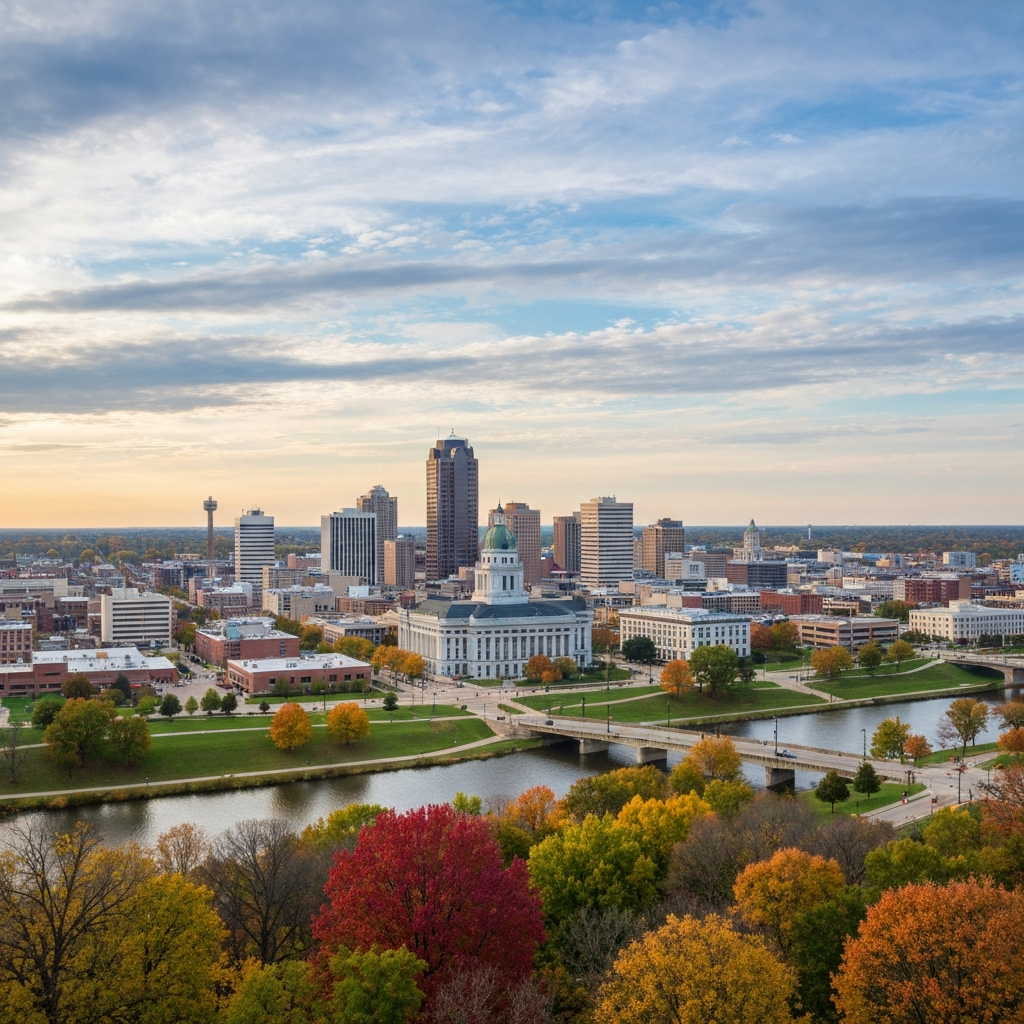
Fort Wayne, Indiana, experiences a humid continental climate characterized by four distinct seasons, each bringing unique weather patterns that shape our daily lives and environment.
Spring: A Season of Renewal
Spring in Fort Wayne is marked by gradually warming temperatures and increased rainfall. Average high temperatures rise from 48°F (9°C) in March to 61°F (16°C) in April, with precipitation averaging around 2.83 inches (72 mm) in March and 3.71 inches (94 mm) in April. This season often brings thunderstorms, with an average of 39 thunderstorm days per year, most occurring from May to August. These storms can occasionally be severe, so it’s important to stay informed about weather alerts during this time.
Summer: Warm and Humid
Summers are typically warm and humid, with average high temperatures peaking at 83°F (28°C) in July. The season also sees the highest rainfall, with June averaging 4.63 inches (118 mm) of precipitation. Thunderstorms are common during the summer months, often accompanied by high winds and hail.
Autumn: Crisp and Colorful
Autumn brings cooler temperatures and less precipitation. Average highs decrease from 64°F (18°C) in October to 50°F (10°C) in November, with rainfall averaging around 2.95 inches (75 mm) in October and 2.92 inches (74 mm) in November. This season is often considered the driest, providing comfortable conditions for outdoor activities.
Winter: Cold and Snowy
Winters are cold, with average high temperatures of 33°F (1°C) in January and lows around 19°F (-7°C). Snowfall averages 33.6 inches (85 cm) per year, with January typically being the snowiest month. While lake-effect snow from Lake Michigan can contribute to snowfall, it usually appears as light flurries by the time it reaches Fort Wayne.
Environmental Considerations
Understanding Fort Wayne’s climate is essential for environmental planning and resilience. The city has been proactive in addressing environmental challenges, such as the cleanup of the former OmniSource South Property, now known as the North River site. In August 2024, the U.S. Environmental Protection Agency announced a $2 million cleanup grant for this site, aiming to transform it into a thriving urban center and encourage walkable and bikeable communities.
By staying informed about our local climate and supporting environmental initiatives, we can contribute to a more sustainable and resilient Fort Wayne.